Tyler, TX
903-805-9619

TREE REMOVAL

Tree Removal in the Tyler Area

Leaning, rotting, storm-cracked or simply in the wrong spot, the tree comes down where the fall was planned and every limb leaves with the crew. Free on-site estimates across Tyler and East Texas.

Four signs the tree has become the problem

A tree that starts to lean or shift is telling you something. If the trunk is tilting, or the soil around the base looks uneven, the roots may be letting go. Trees don't lean without a reason, and in the storms East Texas gets, that instability can turn into a hazardous fall fast.

Rot is the quieter warning. A trunk that feels soft, sounds hollow or has mushrooms growing around its base can be decaying from the inside while it still looks tall. Big limbs dropping for no reason, or whole sections that never leaf out, usually mean the tree is dying, and dying trees shed heavy wood before they go. That is never something you want landing on your roof.

Then there is the damage you can already see. Roots lifting a sidewalk, shifting a driveway or reaching underground systems are a sign the tree has outgrown its spot, and taking it out is often the smartest move before the repair bill grows.

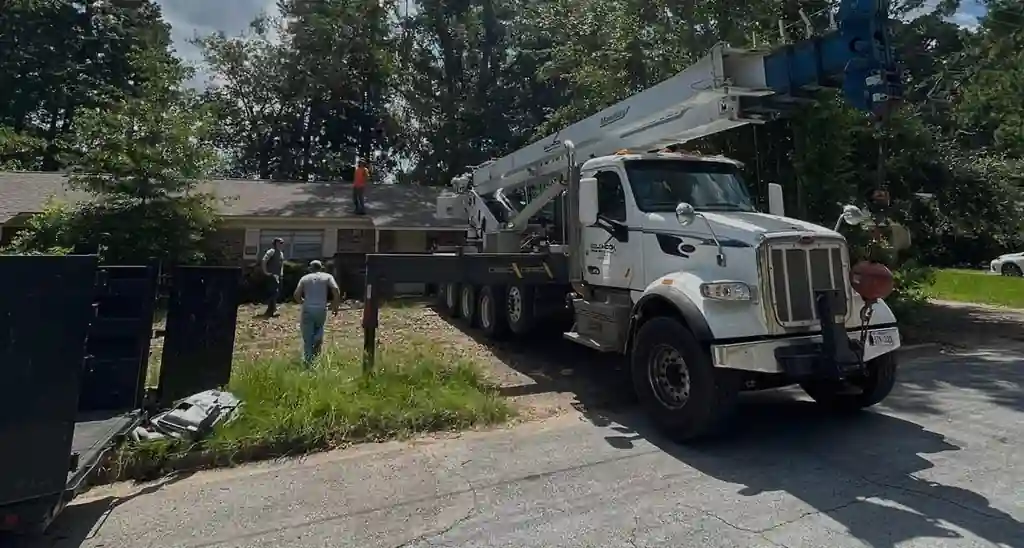
Boom crane truck and Clear Cutters crew set up in a residential driveway ahead of a tree removal

Boom crane truck and Clear Cutters crew set up in a residential driveway ahead of a tree removal

A free look first, then a plan before the first cut

Clear Cutters doesn't do cookie-cutter pricing. James King or one of his crew comes out to your Tyler-area property, looks the tree over closely and talks through your options. If removal is the right call, you get a fair, transparent quote. They aren't in the business of blindly cutting down trees, so if the tree can be saved, they will say so.

Before anyone makes a cut, the crew maps the safest way to bring it down for its size, its location and what stands around it: a house, a fence, a power line. On a tight lot that can mean climbing and rigging the tree out in sections or lifting limbs clear with a crane strap. On open ground it can mean a planned fall path and precise directional cuts at the base.

The hard part belongs to the crew

Removing a big tree is dangerous work, and the people doing it should be trained, insured and properly equipped. The Clear Cutters crew arrives with the gear for the tough ones, so a storm-damaged oak or a decaying pine crowding your yard comes down quickly and without putting your property at risk. The company is fully insured and BBB-accredited.

Cleanup is part of the job, not an add-on. The branches are handled, the debris is hauled off and the yard is tidy before the trucks leave. After an 80 to 100 year old dead oak came down, Dasha Maly wrote on Google that there was "No mess of any kind left in the yard or driveway" and no harm to her old brick walls or slate sidewalk.

Why waiting usually costs more

A leaning trunk, weak roots or a rotting limb can look stable today. It only takes one strong Texas storm to turn "wait and see" into "why didn't we handle this sooner?" Taking a hazardous tree out on your own schedule protects the roof, the driveway and the foundation, and spares you an emergency call in the dark.

It also gives you something back. Clearing a problem tree makes room for new landscaping, lets sunlight reach the yard and leaves more of the space usable. If a stump is the next question, the crew can grind it in the same visit.

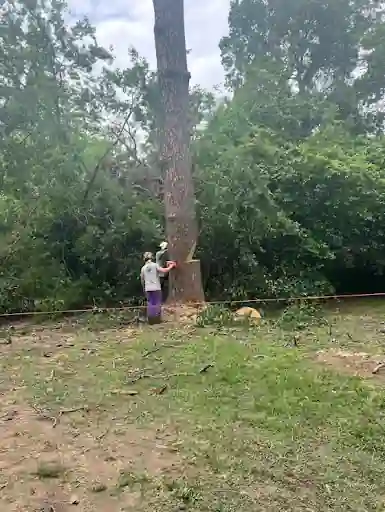
Tyler pine, six hours, from Clear Cutters' own case study: the fall path planned, precise directional cuts at the base, the trunk sectioned and cleared from the yard, and the stump ground out.

One removal, written up like a cut ticket.

Pines in East Texas can grow 80 to 100 feet tall on thick trunks. This one was getting too close to a Tyler home. Read the whole job in the Tyler pine case study, or see more jobs from the crew.

Clear Cutters crew at the base of a large pine in Tyler before the removal

Ticket · Tyler, TX

Tree
Large pine, thick trunk
Work
Tree removal, then stump grinding
Duration
Six hours
Season
Summer, residential, one-time project
Method
Fall path planned, precise directional cuts at the base, trunk sectioned and cleared
Left behind
A clear yard and no stump to sprout back